
Introduction
Seamless pipes, often operating behind the scenes in some of the most extreme industrial environments, are marvels of engineering that silently endure high pressures, extreme temperatures, and corrosive substances. These pipes are integral to a wide range of applications, from oil and gas exploration to chemical processing and power generation. Their ability to withstand harsh conditions without failure is crucial for the safety and efficiency of these industries. This article delves into the metallurgical foundations and rigorous testing protocols that underpin the remarkable endurance of seamless pipes, revealing the secrets behind their silent strength.
1.Metallurgical Foundations
1.1 Alloying for Corrosion Resistance
One of the primary challenges seamless pipes face is corrosion, which can significantly reduce their lifespan and compromise their structural integrity. To combat this, manufacturers employ various alloying techniques to enhance the corrosion resistance of these pipes. Alloying involves adding specific elements to the base metal, such as chromium, nickel, molybdenum, and copper, which form protective oxide layers on the surface of the pipe. These layers act as barriers, preventing corrosive substances from penetrating the metal and causing damage.
For instance, stainless steel seamless pipes, which are widely used in chemical processing and food industries, owe their corrosion resistance to the addition of chromium. Chromium reacts with oxygen in the environment to form a thin, invisible layer of chromium oxide on the surface of the pipe. This layer is self-repairing; if it is scratched or damaged, it quickly reforms, providing continuous protection against corrosion. Similarly, nickel-based alloys are used in highly corrosive environments, such as seawater and acidic solutions, where their superior resistance to pitting and crevice corrosion makes them ideal candidates.
1.2 Thermo-Mechanical Processing for Enhanced Strength
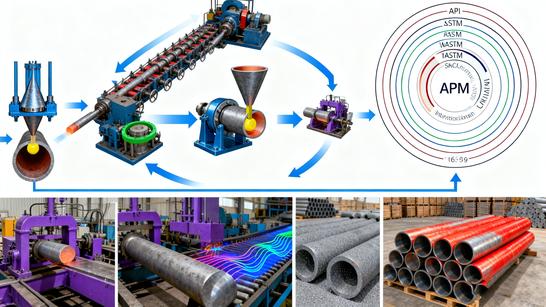
In addition to corrosion resistance, seamless pipes must also possess high strength and ductility to withstand the mechanical stresses they encounter during operation. Thermo-mechanical processing (TMP) is a key technique used to enhance these properties. TMP involves subjecting the metal to controlled heating and cooling cycles, combined with mechanical deformation, to refine its microstructure and improve its mechanical properties.
During TMP, the metal is heated to a specific temperature range where its grains become more malleable. It is then subjected to mechanical deformation, such as rolling or forging, which elongates and aligns the grains, increasing the pipe's strength and ductility. Subsequent cooling processes, such as quenching and tempering, further refine the microstructure, ensuring that the pipe retains its strength and toughness even at low temperatures. This combination of thermal and mechanical treatments results in seamless pipes that can withstand high pressures and mechanical stresses without failing.
1.3 Standards and Certifications: ASTM, JIS
To ensure the quality and reliability of seamless pipes, manufacturers adhere to stringent standards and certifications set by international organizations such as the American Society for Testing and Materials (ASTM) and the Japanese Industrial Standards (JIS). These standards specify the chemical composition, mechanical properties, and testing requirements for seamless pipes, ensuring that they meet the highest quality and safety standards.
For example, ASTM A106 is a widely recognized standard for seamless carbon steel pipes used in high-temperature and high-pressure service. It specifies the chemical composition limits for carbon, manganese, phosphorus, sulfur, silicon, and copper, as well as the minimum tensile strength and yield strength requirements. Similarly, JIS G3454 specifies the dimensions, weight, and mechanical properties of carbon steel pipes for pressure service, ensuring that they can withstand the specified pressures without failure. By adhering to these standards, manufacturers can guarantee the quality and reliability of their seamless pipes, giving customers confidence in their performance.
2.Testing for Endurance
2.1 Hydrostatic and Pneumatic Testing
To validate the strength and leak resistance of seamless pipes, manufacturers subject them to rigorous hydrostatic and pneumatic testing. Hydrostatic testing involves filling the pipe with water and pressurizing it to a specified level, typically 1.5 times the maximum working pressure, to check for leaks or defects. This test ensures that the pipe can withstand the internal pressures it will encounter during operation without rupturing or leaking.
Pneumatic testing, on the other hand, uses compressed air or another gas to pressurize the pipe. While less commonly used than hydrostatic testing due to the higher risk of explosion, pneumatic testing is preferred in certain applications where water cannot be used, such as in pipes carrying gases or in environments where water damage must be avoided. Both tests are critical for ensuring the safety and reliability of seamless pipes in high-pressure applications.
2.2 High-Temperature and Pressure Simulations
In addition to hydrostatic and pneumatic testing, manufacturers also conduct high-temperature and pressure simulations to assess the performance of seamless pipes under extreme conditions. These simulations involve subjecting the pipes to temperatures and pressures that exceed their normal operating range to evaluate their thermal stability and mechanical strength.
For example, in the oil and gas industry, seamless pipes used in deep-sea exploration must withstand high pressures and low temperatures at great depths. To ensure their performance in these conditions, manufacturers conduct simulations that replicate the extreme pressures and temperatures encountered at these depths. These tests help identify any potential weaknesses or defects in the pipes, allowing manufacturers to make necessary improvements before they are deployed in the field.
2.3 Long-Term Corrosion Resistance Studies
Corrosion resistance is a critical factor in the longevity of seamless pipes, especially in environments where they are exposed to corrosive substances. To evaluate the long-term corrosion resistance of these pipes, manufacturers conduct accelerated corrosion tests that simulate the effects of aging and exposure to harsh chemicals.
These tests involve immersing the pipes in corrosive solutions or exposing them to corrosive gases for extended periods, then analyzing the extent of corrosion damage. By studying the corrosion patterns and rates, manufacturers can identify the most corrosion-resistant alloys and coatings, as well as optimize their manufacturing processes to enhance the pipes' durability. These studies are essential for ensuring that seamless pipes can withstand the corrosive environments they will encounter during their service life.
Conclusion
The silent endurance of seamless pipes is a testament to their metallurgical excellence and rigorous testing. Through careful alloying, thermo-mechanical processing, and adherence to international standards, manufacturers create pipes that can withstand the most extreme conditions. Rigorous testing protocols, including hydrostatic and pneumatic testing, high-temperature and pressure simulations, and long-term corrosion resistance studies, further validate their performance and reliability. As industries continue to demand materials that can withstand extreme conditions, seamless pipes will remain at the forefront, enabling progress in the most challenging environments.
[Back to The Invisible Backbone: How Seamless Pipe Innovation Shapes Modern Civilization]