
Introduction
Seamless steel pipes are a crucial component in various industries, ranging from oil and gas to construction and automotive. Their seamless construction offers several advantages over welded pipes, including higher strength, better pressure resistance, and a smoother interior surface. This comprehensive guide will delve into the construction, manufacturing process, and supply aspects of seamless steel pipes, while also highlighting some of our premium products in this category.
1.Construction of Seamless Steel Pipe
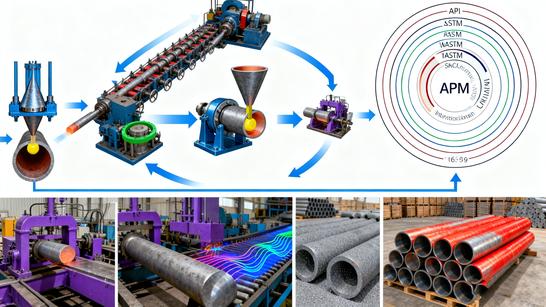
Seamless steel pipes stand as a cornerstone in numerous industrial applications, from oil and gas transportation to structural engineering, owing to their superior strength, pressure resistance, and corrosion immunity. Unlike welded pipes, seamless pipes are crafted from solid billets or rounds, undergoing a series of intricate processes to emerge as hollow tubes without any seams or joints. This seamless construction is the key to their enhanced performance, as it eliminates weak points that could potentially lead to leaks or structural failures under high - pressure or corrosive conditions.
1.1 Initial Preparation: Billet Selection and Heating
The journey of a seamless steel pipe begins with the careful selection of high - quality solid billets or rounds. These billets are typically made from specific grades of steel, chosen based on the intended application of the final pipe. For instance, pipes used in high - pressure environments may require billets with higher tensile strength and better corrosion resistance.
Once selected, the billets are transported to a heating furnace. Here, they are subjected to intense heat, gradually raising their temperature to a precise level. This heating process is crucial as it makes the steel malleable, allowing it to be easily shaped in the subsequent steps. The temperature control is extremely precise, as overheating can lead to excessive grain growth, weakening the steel, while underheating may make it difficult to pierce and roll the billet.
1.2 Piercing: Creating the Hollow Shell
After reaching the optimal temperature, the heated billet is transferred to a piercing mill. In this stage, a pointed mandrel is forced through the center of the billet, simultaneously rotating and advancing. As the mandrel penetrates, it pushes the steel outward, forming a hollow shell. This piercing process requires high - precision machinery and skilled operators to ensure that the hole is centered and of the correct diameter. Any deviation during piercing can result in an uneven wall thickness in the final pipe, affecting its structural integrity.
1.3 Rolling: Achieving the Desired Dimensions
The hollow shell then moves to a rolling mill, where it undergoes further shaping. There are different types of rolling processes, such as hot rolling and cold rolling, depending on the requirements of the pipe. Hot rolling is carried out at high temperatures and is used to reduce the diameter and wall thickness of the shell to the desired specifications. The shell is passed through a series of rolls that gradually compress it, giving it a more uniform shape and size. Cold rolling, on the other hand, is performed at room temperature and is often used to improve the surface finish and dimensional accuracy of the pipe.
1.4 Final Steps: Cooling, Cutting, and Inspection
Once the pipe has been rolled to the correct dimensions, it is cooled down. Cooling can be done through various methods, such as air cooling or water quenching, depending on the steel grade and the desired properties of the pipe. After cooling, the pipe is cut to the required length using high - precision cutting equipment.
Finally, each pipe undergoes a rigorous inspection process. This includes dimensional checks to ensure that the diameter, wall thickness, and length are within the specified tolerances. Non - destructive testing methods, such as ultrasonic testing and radiographic testing, are also used to detect any internal defects that may have occurred during the manufacturing process. Only pipes that pass all these inspections are deemed suitable for use in various industrial applications, ensuring the reliability and safety of seamless steel pipes in critical infrastructure projects.
2.Manufacturing Process of Seamless Steel Pipe
The manufacturing of seamless steel pipes is an intricate and highly precise industrial process that demands not only advanced and sophisticated equipment but also the expertise of well - trained operators. Each step in the production sequence is crucial for ensuring the final product meets stringent quality and performance standards.
The process kicks off with the meticulous selection of raw materials. Typically, carbon steel or stainless steel billets are chosen due to their favorable mechanical properties and suitability for various applications. These billets are the starting point of the seamless steel pipe production journey and must be of high quality to guarantee the integrity of the finished pipes.
Once the appropriate billets have been selected, they are transported to a furnace for heating. In this furnace, the billets are subjected to extremely high temperatures, which render them malleable. This malleability is essential as it allows the billets to be easily shaped into the desired form during subsequent processing steps. The heating process is carefully controlled to ensure uniform temperature distribution throughout the billet, preventing any internal stresses or defects that could compromise the quality of the final pipe.
After reaching the optimal temperature, the heated billet is transferred to a piercing mill. Here, a pointed tool is used to pierce the center of the billet, creating a hollow tube. This initial piercing operation is a critical step as it sets the foundation for the seamless structure of the pipe. The precision of the piercing process directly impacts the inner diameter and wall thickness uniformity of the resulting tube.
Following piercing, the hollow tube is moved to either a mandrel mill or a plug mill for further shaping. In a mandrel mill, a long, cylindrical mandrel is inserted into the hollow tube, and the tube is then rolled around it. This rolling action gradually reduces the wall thickness and simultaneously increases the diameter of the tube. Multiple passes through the mill are often required to achieve the precise dimensions specified for the seamless steel pipe. Similarly, in a plug mill, a plug is used inside the tube during the rolling process to control the inner diameter while the outer diameter is shaped by the rolls.
Once the desired diameter and wall thickness have been attained through rolling, the pipe is cooled. Cooling is a carefully regulated process to prevent the formation of undesirable microstructures within the steel. Rapid or improper cooling can lead to issues such as brittleness or reduced mechanical strength.
After cooling, the pipe undergoes a series of finishing operations. Straightening is carried out to ensure the pipe has a perfectly straight axis, which is vital for its proper installation and functionality in various applications. Cutting operations are then performed to divide the long - continuous pipe into the required lengths. Finally, the pipes are subjected to rigorous testing procedures. These tests may include non - destructive testing methods like ultrasonic testing and radiographic testing to detect any internal or surface defects, as well as mechanical tests to assess properties such as tensile strength and yield strength. Only after passing all these tests does the seamless steel pipe earn the right to be considered a high - quality product ready for use in a wide range of industries.
3.Seamless Carbon Steel Pipe
Seamless carbon steel pipes stand as indispensable components in a vast array of industrial applications, primarily where high - strength and exceptional pressure - resistance capabilities are non - negotiable. These pipes are crafted from carbon steel, a fundamental alloy composed predominantly of iron and carbon, with minor yet crucial additions of other elements like manganese, silicon, and sulfur. The carbon content within carbon steel pipes is a key determinant of their properties, typically fluctuating between 0.05% and 2.0%. This range allows for a fine - tuning of the pipe's characteristics to meet specific application requirements.
The manufacturing process of seamless carbon steel pipes is a marvel of engineering precision. Unlike welded pipes, which are formed by joining separate sections through welding techniques, seamless pipes are created by piercing a solid billet of carbon steel. This initial piercing creates a hollow shell, which is then elongated and shaped through a series of rolling and sizing operations. The absence of a weld seam in seamless pipes eliminates potential weak points that could be susceptible to failure under high - pressure conditions. This seamless construction ensures a uniform distribution of stress throughout the pipe, enhancing its overall structural integrity.
One of the most significant advantages of seamless carbon steel pipes over other types is their superior corrosion resistance. The carbon steel alloy, when properly treated and coated, can withstand the corrosive effects of various substances encountered in industrial environments. For instance, in oil and gas pipelines, where the pipes are exposed to a mixture of hydrocarbons, water, and other chemicals, the seamless carbon steel pipes' corrosion - resistant properties prevent premature degradation, ensuring the long - term integrity of the pipeline system. This not only reduces maintenance costs but also minimizes the risk of leaks and environmental hazards.
In addition to corrosion resistance, seamless carbon steel pipes boast higher tensile strength compared to many alternative pipe materials. Tensile strength refers to the ability of a material to withstand pulling forces without breaking. The high carbon content in these pipes, along with the carefully controlled addition of other alloying elements, contributes to their remarkable tensile strength. This makes them ideal for applications where the pipes are subjected to significant mechanical stress, such as in boiler tubes. In boiler systems, the pipes must endure high internal pressures and temperatures while maintaining their structural stability. The high tensile strength of seamless carbon steel pipes enables them to perform reliably under these extreme conditions.
Improved ductility is another notable advantage of seamless carbon steel pipes. Ductility is the ability of a material to deform plastically without fracturing. This property allows the pipes to be bent, shaped, and installed in complex configurations without cracking. In mechanical applications where the pipes need to be routed through tight spaces or around obstacles, the ductility of seamless carbon steel pipes provides flexibility in design and installation, reducing the need for additional fittings and joints.
Overall, seamless carbon steel pipes have become the preferred choice in numerous industries due to their combination of high strength, pressure resistance, corrosion resistance, and ductility. Their widespread use in oil and gas pipelines, boiler tubes, and mechanical applications where high pressure and temperature are involved is a testament to their reliability and performance. As industrial demands continue to evolve, seamless carbon steel pipes are likely to remain a cornerstone of industrial infrastructure, driving innovation and enabling the safe and efficient operation of critical systems.
4.Selecting a Seamless Steel Pipe Supplier
In the realm of industrial operations, seamless steel pipes play a pivotal role in various applications, ranging from oil and gas transportation to mechanical engineering. Given their critical importance, choosing the right seamless steel pipe supplier is not just a business decision; it's a strategic move that can significantly impact the quality, reliability, and cost - effectiveness of your projects.
4.1 Manufacturing Capabilities: The Foundation of Quality
The first and foremost factor to consider when selecting a seamless steel pipe supplier is their manufacturing capabilities. A reputable supplier should possess state - of - the - art equipment and advanced production processes. High - precision piercing machines, rolling mills, and sizing equipment are essential for producing seamless pipes with consistent dimensions and excellent surface finish. These advanced tools enable the supplier to control the manufacturing process precisely, ensuring that each pipe meets the required specifications.
Moreover, the supplier's ability to handle different types of raw materials is crucial. Seamless steel pipes can be made from various grades of carbon steel, alloy steel, and stainless steel, each with its unique properties and applications. A supplier with a wide range of raw material sourcing options can offer you pipes tailored to your specific needs, whether you require high - strength, corrosion - resistant, or heat - resistant pipes.
4.2 Quality Control Measures: Ensuring Uncompromised Standards
Quality control is the cornerstone of a reliable seamless steel pipe supplier. Look for a supplier that has a comprehensive quality management system in place, adhering to international standards such as ISO 9001. This system should cover every stage of the production process, from raw material inspection to final product testing.
During raw material inspection, the supplier should conduct rigorous tests to verify the chemical composition, mechanical properties, and surface quality of the incoming steel billets. In - process quality control involves monitoring key parameters such as temperature, pressure, and rolling speed during pipe production to ensure consistent quality. Finally, the finished pipes should undergo a series of tests, including hydrostatic testing, ultrasonic testing, and dimensional inspection, to guarantee their integrity and compliance with the specified standards.
4.3 Industry Experience: A Wealth of Knowledge
Experience in the industry is an invaluable asset when it comes to selecting a seamless steel pipe supplier. An experienced supplier has a deep understanding of the market trends, customer requirements, and industry challenges. They have likely encountered a wide range of project scenarios and can draw on their past experiences to provide you with practical solutions and valuable advice.
An experienced supplier is also more likely to have established long - term relationships with raw material suppliers, logistics partners, and other stakeholders in the supply chain. This network can help them ensure a stable supply of high - quality materials, timely delivery, and cost - effective transportation, ultimately benefiting you as the customer.
4.4 Customized Solutions and Customer Responsiveness
In today's dynamic business environment, the ability to provide customized solutions is a key differentiator for a seamless steel pipe supplier. A reliable supplier should be able to offer a wide range of pipe sizes, grades, and finishes to meet your specific requirements. Whether you need pipes with special dimensions, unique surface treatments, or specific mechanical properties, the supplier should have the technical expertise and production flexibility to accommodate your needs.
Additionally, customer responsiveness is essential. A good supplier should be prompt in answering your inquiries, providing quotes, and addressing any concerns you may have. They should keep you informed throughout the production and delivery process, ensuring that you have a clear understanding of the status of your order. A supplier that values customer satisfaction will go the extra mile to meet your deadlines and exceed your expectations.
In conclusion, selecting a seamless steel pipe supplier requires careful consideration of multiple factors, including manufacturing capabilities, quality control measures, industry experience, customized solutions, and customer responsiveness. By choosing a supplier that excels in these areas, you can ensure the quality and reliability of your seamless steel pipes, laying a solid foundation for the success of your projects.
5.Quality Control in Seamless Steel Pipe Production
Quality control stands as an indispensable and all - encompassing aspect in the production of seamless steel pipes. It serves as a rigorous safeguard, ensuring that every single pipe that rolls off the production line meets the stringent specified dimensions, mechanical properties, and surface finish requirements. This meticulous process is crucial as seamless steel pipes are widely used in critical applications such as oil and gas pipelines, power generation boilers, and high - pressure mechanical systems, where any deviation from the standards can lead to catastrophic consequences, including leaks, structural failures, and safety hazards.
5.1 Dimensional Inspection
Dimensional inspection is the first line of defense in quality control. It involves a comprehensive measurement of the pipe's key geometric parameters, namely diameter, wall thickness, and length. Specialized measuring instruments, such as calipers, micrometers, and laser - based measurement systems, are employed to ensure high - precision readings. The pipes are measured at multiple points along their length to account for any potential variations. For example, in the case of diameter measurement, not only is the outer diameter checked, but also the inner diameter in some cases to ensure uniformity. Wall thickness measurement is equally critical as uneven wall thickness can lead to stress concentrations and premature failure under pressure. The specified tolerances for these dimensions are extremely tight, often in the range of a fraction of a millimeter, and any pipe that falls outside these tolerances is rejected or marked for rework.
5.2 Mechanical Testing
Mechanical testing is another vital component of quality control. Tensile testing is carried out to determine the pipe's strength characteristics. A sample of the pipe is subjected to a gradually increasing tensile force until it fractures. The results of this test provide information about the pipe's yield strength, ultimate tensile strength, and elongation. Yield strength indicates the point at which the pipe begins to deform plastically, while ultimate tensile strength represents the maximum force the pipe can withstand before breaking. Elongation measures the pipe's ability to stretch without cracking, which is an important indicator of its ductility. Impact testing, on the other hand, assesses the pipe's toughness, especially its ability to absorb energy during sudden impacts or shocks. This is particularly relevant for pipes used in environments where they may be subjected to dynamic loads, such as in earthquake - prone areas or in machinery with moving parts.
5.3 Chemical Analysis
Chemical analysis is performed to precisely determine the pipe's chemical composition. The composition of the steel used in seamless pipes is carefully controlled as different elements play specific roles in determining the pipe's properties. For example, carbon provides strength and hardness, but too much carbon can make the pipe brittle. Manganese improves the steel's hardenability and strength, while silicon acts as a deoxidizer. Sulfur and phosphorus, if present in excessive amounts, can reduce the pipe's ductility and toughness. By conducting chemical analysis, manufacturers can ensure that the pipe's composition meets the required standards, thus guaranteeing consistent performance.
5.4 Non - Destructive Testing (NDT)
NDT methods are the final but equally important step in quality control. Ultrasonic testing uses high - frequency sound waves to detect internal defects such as cracks, inclusions, and porosity. The sound waves are transmitted into the pipe, and any reflections or echoes from internal flaws are detected and analyzed. Radiographic testing, similar to X - rays, provides a detailed image of the pipe's internal structure, allowing for the identification of hidden defects. These NDT methods are non - invasive and do not damage the pipe, enabling manufacturers to inspect the entire length of the pipe without compromising its integrity.
In conclusion, the comprehensive quality control measures in seamless steel pipe production, encompassing dimensional inspection, mechanical testing, chemical analysis, and NDT, work in tandem to ensure that the pipes are of the highest quality, reliable, and safe for their intended applications.
6.Our Premium Seamless Steel Pipe Products
We offer a wide range of premium seamless steel pipe products to meet the diverse needs of our customers. Our products include:
Cold-Drawn Precision Seamless Tube with High Dimensional Accuracy: This product is ideal for applications where precise dimensions and a smooth surface finish are required. It is manufactured using a cold-drawing process that ensures high dimensional accuracy and excellent surface quality.
Hot-Finished Seamless Pipe for High-Pressure Applications: This pipe is designed to withstand high pressure and temperature conditions, making it suitable for use in oil and gas pipelines, boiler tubes, and other high-pressure applications. It is manufactured using a hot-finishing process that enhances its strength and durability.
JIS G3459 SUS304 Stainless Steel Seamless Pipe for General Piping Applications: This stainless steel pipe is made from high-quality SUS304 stainless steel, which offers excellent corrosion resistance and durability. It is suitable for use in a wide range of general piping applications, including water supply, gas transmission, and chemical processing.
EN 10216-5 1.4404 Stainless Steel Seamless Tube for Corrosion-Resistant Applications: This stainless steel tube is manufactured according to the EN 10216-5 standard and is made from 1.4404 stainless steel, which provides superior corrosion resistance in harsh environments. It is ideal for use in chemical processing, marine applications, and other corrosion-resistant applications.
Conclusion
Seamless steel pipes are an essential component in many industries, offering superior strength, pressure resistance, and corrosion resistance compared to welded pipes. By understanding the construction, manufacturing process, and quality control measures involved in seamless steel pipe production, you can make informed decisions when selecting a supplier and choosing the right product for your application. Our premium seamless steel pipe products are designed to meet the highest standards of quality and performance, ensuring reliable and long-lasting service in a wide range of applications.