
Introduction
Stainless steel and metal pipes are essential components in various industries, ranging from construction to chemical processing. Their durability, corrosion resistance, and versatility make them ideal for a wide range of applications. This comprehensive guide will delve into the dimensions, types, and selection criteria for stainless steel and metal pipes, ensuring you make informed decisions for your projects.
1.Understanding Pipe Dimensions
In the intricate world of industrial and construction projects, stainless steel pipes play a pivotal role. From transporting vital fluids in chemical plants to facilitating the flow of gases in power generation facilities, these pipes are the unsung heroes that keep various systems running smoothly. However, the success of any pipe - based system hinges on a fundamental aspect: understanding pipe dimensions. For stainless steel pipes, a comprehensive grasp of outer diameter (OD), inner diameter (ID), and wall thickness is not just a technical necessity; it's the cornerstone of ensuring compatibility, efficiency, and safety in every application.[Link to The Advantages of Using 1 1/2 Inch Stainless Steel Pipes in Plumbing Systems ]
1.1 The Significance of Pipe Dimensions in System Compatibility
Pipe dimensions are the language through which different components of a system communicate. Each part, from valves and fittings to pumps and connectors, is designed to work seamlessly with pipes of specific dimensions. Imagine a scenario where a valve is intended for a 2 - inch stainless steel pipe, but the actual pipe installed has an outer diameter that is slightly off. This mismatch can lead to a host of problems, ranging from leaks and reduced flow rates to complete system failure.
For example, in a water treatment plant, stainless steel pipes are used to transport various chemicals and treated water. The fittings and connectors are precisely engineered to fit pipes with specific outer diameters. If the OD of the pipes is not as per the design specifications, the connections may not be tight enough, allowing chemicals to leak out. This not only poses a safety hazard to the plant workers but also contaminates the surrounding environment. Moreover, the improper fit can disrupt the flow of water and chemicals, affecting the overall efficiency of the treatment process.
In the construction industry, stainless steel pipes are often used for plumbing and HVAC systems. The outer diameter of these pipes is crucial for ensuring that they can be properly installed within the walls and ceilings of buildings. If the pipes are too large, they may not fit in the designated spaces, requiring costly modifications to the building structure. On the other hand, if the pipes are too small, they may not be able to handle the required flow rates, leading to inadequate water supply or poor ventilation.
1.2 Outer Diameter (OD): The Key to Fitting and Connection
The outer diameter of a stainless steel pipe is the measurement across the widest point of the pipe. It is the most visible and easily measurable dimension, and it plays a vital role in the fitting and connection of pipes. When selecting pipes for a project, engineers and technicians must ensure that the outer diameter of the pipes matches the dimensions of the fittings and connectors that will be used.
For instance, in a piping system for a food processing plant, stainless steel pipes are used to transport various food products. The fittings, such as elbows, tees, and reducers, are designed to fit pipes with specific outer diameters. If the OD of the pipes is not accurate, the fittings may not fit properly, leading to leaks and contamination of the food products. This can have serious consequences, including product recalls and damage to the company's reputation.
In addition to ensuring proper fitting, the outer diameter also affects the overall layout and design of the piping system. Pipes with larger outer diameters require more space for installation, which can impact the available space in a facility. Engineers must carefully consider the outer diameter of the pipes when designing the system to ensure that there is enough room for the pipes to be installed and maintained properly.
1.3 Inner Diameter (ID): The Pathway for Fluid and Gas Flow
While the outer diameter is important for fitting and connection, the inner diameter of a stainless steel pipe is equally crucial as it determines the space inside the pipe through which fluids or gases flow. The inner diameter directly affects the flow rate of the fluid or gas, which is a critical parameter in many applications.
For example, in a chemical plant, stainless steel pipes are used to transport corrosive chemicals. The flow rate of these chemicals must be carefully controlled to ensure that the chemical reactions in the plant proceed as intended. If the inner diameter of the pipes is too small, the flow rate may be restricted, leading to incomplete reactions or the build - up of pressure in the system. On the other hand, if the inner diameter is too large, the flow rate may be too high, causing turbulence and potential damage to the pipes and other components of the system.
In the oil and gas industry, stainless steel pipes are used to transport crude oil and natural gas over long distances. The inner diameter of these pipes is designed to optimize the flow rate while minimizing pressure losses. A larger inner diameter allows for a higher flow rate, which is essential for transporting large volumes of oil and gas efficiently. However, a larger inner diameter also requires more material to manufacture the pipe, which can increase the cost of the project. Therefore, engineers must carefully balance the inner diameter of the pipes with other factors such as cost and pressure requirements to design an optimal piping system.
2.Types of Stainless Steel and Metal Pipes
In the realm of industrial and construction applications, stainless steel and metal pipes play a pivotal role. Their diverse types cater to a wide array of needs, from high - pressure scenarios to cost - effective solutions for lower - pressure requirements. This article delves deeper into the various types of stainless steel and metal pipes, focusing on seamless pipes, welded pipes, and square tubing, to provide a comprehensive understanding of their characteristics and applications.
2.1 Seamless Pipes: The Epitome of Strength and Precision
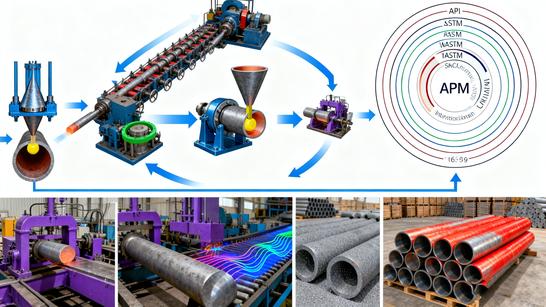
Seamless pipes are a marvel of engineering, manufactured without any welds. This unique manufacturing process endows them with uniform strength throughout their entire structure. Unlike welded pipes, there are no weak points at the welds that could potentially compromise the pipe's integrity under pressure. Additionally, the smooth interior surface of seamless pipes is a significant advantage. It reduces friction, allowing for the efficient flow of fluids, whether they are liquids or gases. This characteristic makes seamless pipes ideal for high - pressure applications where the integrity of the pipe and the smooth flow of substances are of utmost importance. Moreover, in environments where corrosion resistance is paramount, seamless pipes shine due to their seamless construction, which minimizes the areas vulnerable to corrosion.[Link toThe Importance of Choosing the Right Metal Seamless Pipe for High-Pressure Applications ]
2.2 Cold - Drawn Precision Seamless Tube with High Dimensional Accuracy
One of the remarkable variants of seamless pipes is the cold - drawn precision seamless tube. This type of tube is perfect for applications that demand extremely tight tolerances and high precision. In industries such as aerospace, automotive, and precision machinery manufacturing, where even the slightest deviation from the specified dimensions can lead to catastrophic consequences, these tubes are indispensable. The cold - drawing process involves pulling the tube through a die at room temperature, which not only refines its dimensions but also enhances its surface finish and mechanical properties. The result is a tube that meets the most stringent requirements for accuracy and quality.[Link to Understanding the Differences Between Seamless and Welded Pipes for Your Project ]
2.3 Hot - Finished Seamless Pipe for High - Pressure Applications
For situations that involve extreme pressures and temperatures, hot - finished seamless pipes are the go - to choice. During the manufacturing process, the pipe is heated to a high temperature and then formed into its final shape. This heat treatment gives the pipe excellent strength and the ability to withstand harsh conditions. In the oil and gas industry, for example, where pipes are subjected to high - pressure fluid flow and extreme temperature variations deep underground or in offshore environments, hot - finished seamless pipes are crucial. They ensure the safe and efficient transportation of oil and gas over long distances without the risk of pipe failure.[Link to Exploring the Versatility of 1 1/2 Square Steel Tubing in Construction Projects ]
2.4 JIS G3459 SUS304 Stainless Steel Seamless Pipe for General Piping Applications
The JIS G3459 SUS304 stainless steel seamless pipe is a versatile option suitable for a wide range of general piping applications. SUS304 stainless steel is known for its excellent corrosion resistance, making it ideal for use in environments where the pipe may be exposed to moisture, chemicals, or other corrosive substances. Whether it's in water supply systems, heating and cooling systems, or general industrial piping, this type of seamless pipe offers reliable performance and long - term durability.
2.5 EN 10216 - 5 1.4404 Stainless Steel Seamless Tube for Corrosion - Resistant Applications
In harsh environments where corrosion is a major concern, the EN 10216 - 5 1.4404 stainless steel seamless tube provides enhanced corrosion resistance. This type of tube is often used in chemical processing plants, marine applications, and other industries where the pipe is constantly exposed to aggressive chemicals or saltwater. Its superior corrosion - resistant properties ensure that the pipe remains intact and functional for an extended period, reducing maintenance costs and downtime.
2.6 ASTM A312 TP304/TP316 Stainless Steel Seamless Pipe for Chemical, Food, and Pharmaceutical Applications
In sensitive industries such as chemical, food, and pharmaceutical, hygiene is of the utmost importance. The ASTM A312 TP304/TP316 stainless steel seamless pipes are designed to meet these stringent hygiene requirements. These pipes are made from high - quality stainless steel that is non - toxic and easy to clean. They are safe for use in the transportation of chemicals, food products, and pharmaceutical ingredients, ensuring that there is no contamination during the process.
2.7 Welded Pipes: Cost - Effective Solutions for Lower - Pressure Applications
Welded pipes are manufactured by welding together sections of steel. This production method makes them more cost - effective compared to seamless pipes, especially for large - scale projects. They are suitable for lower - pressure applications where the high strength and precision of seamless pipes are not strictly necessary. Welded pipes come in various grades and finishes, allowing them to be tailored to specific needs. For example, different coatings can be applied to enhance their corrosion resistance or improve their aesthetic appearance.
2.8 Square Tubing: Stability and Strength in a Unique Shape
Square steel tubing, such as 1 1/2 square steel tubing, offers a distinct shape that is highly advantageous for structural applications, frames, and supports. Its uniform shape provides excellent stability and strength. In construction projects, square tubing is often used as columns, beams, or in the framework of buildings and bridges. Its ability to distribute loads evenly makes it a reliable choice for ensuring the structural integrity of a project. Additionally, square tubing is also popular in the manufacturing of furniture, where its clean lines and sturdy construction add both functionality and aesthetic appeal.
In conclusion, the world of stainless steel and metal pipes is diverse and complex, with each type having its own unique set of characteristics and applications. Whether it's the high - precision and strength of seamless pipes, the cost - effectiveness of welded pipes, or the stability of square tubing, understanding these differences is essential for selecting the right pipe for a particular project. By making an informed choice, engineers and project managers can ensure the success and longevity of their applications.
3.Selection Criteria
3.1 Material: A Foundation for Pipe Performance
The material of a pipe is the cornerstone upon which its overall functionality and longevity are built. Stainless steel stands out as a premium choice, primarily because of its outstanding corrosion resistance. This property is attributed to the presence of chromium in its composition, which forms a thin, tenacious oxide layer on the surface. This passive layer acts as an impermeable shield, preventing the underlying metal from coming into contact with corrosive agents such as moisture, chemicals, and salts. In industries like food processing, pharmaceuticals, and marine applications, where strict hygiene standards and exposure to corrosive substances are common, stainless - steel pipes are the preferred option. They not only ensure the integrity of the transported substances but also have a long service life, reducing the need for frequent replacements.
On the other hand, black iron pipes offer a cost - effective solution for non - corrosive environments. They are commonly used in residential plumbing for water supply lines in areas where the water quality is relatively good and does not contain high levels of corrosive elements. Black iron pipes are also widely employed in gas distribution systems, as natural gas is generally non - corrosive to iron under normal operating conditions. However, it is important to note that in environments with high humidity or the presence of corrosive gases, black iron pipes are prone to rusting, which can lead to leaks and a reduction in their structural integrity over time.
3.2 Pressure Rating: Ensuring Safe and Reliable Operation
The pressure rating of a pipe is a critical parameter that determines its ability to withstand the internal pressures it will be subjected to during operation. Pipes are designed to handle specific pressure ranges, and exceeding these limits can result in catastrophic failures such as bursts or leaks. When selecting a pipe, it is essential to accurately calculate the expected maximum pressure in the system. This includes considering factors such as the pressure generated by pumps, the elevation changes in the piping system, and any potential pressure surges that may occur during start - up, shut - down, or sudden changes in flow rate.
For high - pressure applications, such as in industrial processes involving the transportation of steam or compressed gases, pipes with high - pressure ratings are required. These pipes are typically made from materials with high tensile strength, such as carbon steel or alloy steel, and are manufactured to strict quality standards to ensure their pressure - bearing capacity. In contrast, low - pressure applications, such as residential water supply systems, can use pipes with lower pressure ratings, which are often more cost - effective. It is also important to consider the safety factors when selecting pipes. A safety factor is an additional margin of strength built into the pipe design to account for uncertainties in the operating conditions and to ensure that the pipe can withstand unexpected pressure increases without failure.
3.3 Temperature Resistance: Adapting to Extreme Conditions
Some applications demand pipes that can withstand extreme temperatures, either high or low. High - temperature applications are common in industries such as power generation, where pipes are used to transport hot steam or flue gases. In these cases, pipes must be made from materials that can maintain their mechanical properties at elevated temperatures. For example, stainless steel alloys with high chromium and nickel content, such as 316L stainless steel, have excellent high - temperature resistance and can withstand temperatures up to several hundred degrees Celsius without significant deformation or loss of strength.
Low - temperature applications, on the other hand, are often found in cryogenic systems, such as those used for storing and transporting liquefied natural gas (LNG). Pipes used in these systems must be able to withstand extremely low temperatures, typically below - 160°C. Special materials, such as aluminum alloys or certain types of stainless steel, are used for cryogenic pipes because they remain ductile and do not become brittle at low temperatures. In addition to the material selection, the design and installation of pipes for extreme - temperature applications also require special considerations. For high - temperature pipes, thermal expansion and contraction must be accounted for to prevent excessive stress on the pipe joints and supports. For low - temperature pipes, insulation is crucial to minimize heat transfer and prevent the formation of ice or condensation, which can affect the pipe's performance.
3.4 Chemical Compatibility: Preventing Corrosion and Contamination
The chemical compatibility of the pipe material with the substances it will transport is of utmost importance to avoid corrosion or contamination. Different chemicals can react with pipe materials in various ways, leading to degradation of the pipe wall, leaks, or the introduction of impurities into the transported fluid. For example, when transporting acidic substances, pipes made from materials such as polyvinyl chloride (PVC) or fiberglass - reinforced plastic (FRP) are often preferred, as they are highly resistant to acid corrosion.
In the chemical industry, where a wide variety of chemicals are handled, a detailed analysis of the chemical properties of each substance is required to select the most suitable pipe material. Some chemicals may require special linings or coatings on the inside of the pipe to provide an additional layer of protection. For instance, in the transportation of corrosive liquids, an epoxy lining can be applied to the inner surface of a steel pipe to prevent direct contact between the liquid and the metal, thereby extending the pipe's service life.
3.5 Cost: Balancing Initial Investment and Long - Term Expenses
Cost is a significant factor in pipe selection, but it should not be the sole determining factor. While it is important to consider the initial cost of purchasing and installing the pipes, it is equally crucial to evaluate the long - term maintenance and replacement expenses. A pipe with a low initial cost may seem attractive, but if it requires frequent repairs or replacements due to poor performance or low durability, the overall cost over its service life may be much higher than that of a more expensive but higher - quality pipe.
For example, although black iron pipes are relatively inexpensive initially, in corrosive environments, they may need to be replaced more frequently than stainless - steel pipes, resulting in higher long - term costs. On the other hand, stainless - steel pipes may have a higher upfront cost, but their long service life and low maintenance requirements can make them a more cost - effective choice in the long run. Therefore, when making a pipe selection decision, a comprehensive cost - benefit analysis should be conducted, taking into account all the relevant factors to ensure that the most economical and sustainable solution is chosen.
4.Maintenance and Care
Proper maintenance extends the life of your pipes. Regular inspections for leaks, corrosion, and damage are essential. Cleaning the interior surfaces periodically can prevent blockages and maintain flow efficiency. For stainless steel pipes, using appropriate cleaning agents that do not damage the protective oxide layer is crucial.
Conclusion
Selecting the right stainless steel or metal pipe involves understanding dimensions, types, and application-specific requirements. By considering factors like material, pressure rating, and cost, you can ensure optimal performance and longevity for your piping systems. Explore our range of high-quality pipes, including the Cold-Drawn Precision Seamless Tube with High Dimensional Accuracy, Hot-Finished Seamless Pipe for High-Pressure Applications, and more, to find the perfect fit for your needs.